
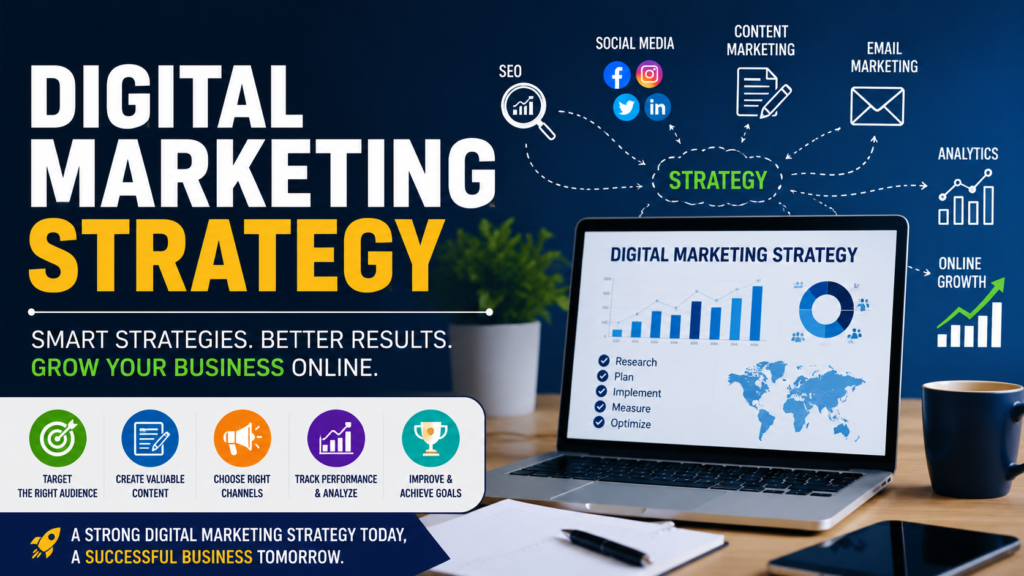
A Digital Marketing Strategy is a structured plan that helps businesses reach the right audience, build brand awareness, generate leads, and increase online sales. In today’s competitive digital world, having a clear strategy is essential for businesses of every size.
Whether you run a small business, eCommerce store, startup, or established company, the right Digital Marketing Strategy can help you attract customers and achieve measurable growth.
What Is a Digital Marketing Strategy?
A Digital Marketing Strategy is a plan that uses Online Marketing channels to promote a business, products, or services. These channels may include search engines, social media, email, websites, paid advertising, and content marketing.
A successful strategy starts by understanding your target audience and business goals. You can then select the most effective digital channels and measure the results.
Why Is Digital Marketing Strategy Important?
A strong digital strategy offers several benefits:
- Helps businesses reach a wider audience
- Increases website traffic and brand visibility
- Generates qualified leads
- Improves customer engagement
- Supports online sales and conversions
- Makes marketing performance easier to measure
- Helps businesses compete in the digital marketplace
Unlike traditional marketing, digital marketing allows businesses to track important metrics and adjust campaigns based on real-time performance.
A strong Internet Marketing strategy can also help businesses increase website traffic, generate leads, and improve online visibility.
10 Effective Digital Marketing Strategies
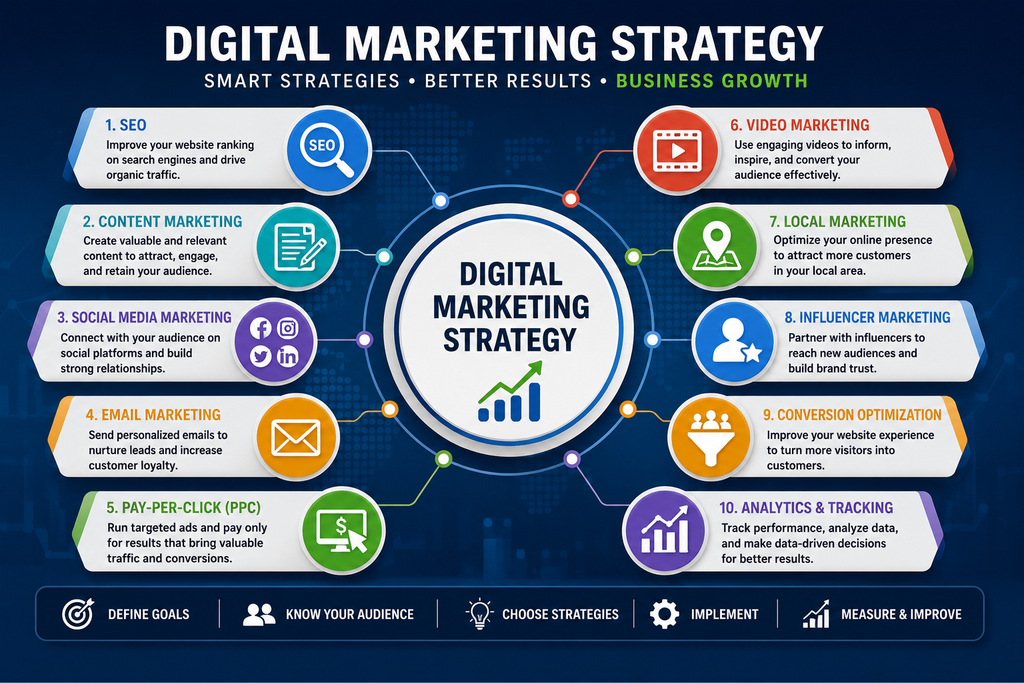
1. Search Engine Optimization (SEO)
SEO helps your website appear higher in search engine results. Research relevant keywords, create useful content, optimize page titles and meta descriptions, and build quality backlinks. For more SEO guidance, visit the Google Search Central SEO Starter Guide.
For example, using the keyword Digital Marketing Strategy naturally in your title, headings, URL, and content can help search engines understand your topic.
2. Content Marketing
Content marketing focuses on creating valuable and relevant content for your audience. Blog posts, guides, videos, infographics, and case studies can attract visitors and establish your business as a trusted source.
The goal is not simply to create more content but to create content that solves real problems.
3. Social Media Marketing
Social media platforms can help businesses connect with potential customers and build stronger relationships. Choose platforms where your target audience is active and share useful, engaging content consistently.
Social media can also increase website traffic and support brand awareness.
4. Email Marketing
Email marketing remains an effective way to communicate with existing and potential customers. Businesses can use email campaigns to share offers, educational content, product updates, and personalized recommendations.
A well-planned email strategy can improve customer retention and repeat purchases.
5. Pay-Per-Click Advertising
PPC advertising allows businesses to display ads to people searching for specific products, services, or solutions. With proper keyword research and targeting, paid advertising can generate targeted traffic quickly.
However, businesses should monitor cost per click, conversions, and return on investment to avoid unnecessary spending.
6. Video Marketing
Video content is an effective way to explain products, demonstrate services, and educate audiences. Short videos, tutorials, product demonstrations, and customer testimonials can increase engagement.
Adding relevant videos to your marketing strategy can also strengthen your overall content plan.
7. Local Digital Marketing
Local businesses can use digital marketing to attract customers in specific geographic areas. Optimizing your Google Business Profile, creating location-based content, and collecting genuine customer reviews can improve local visibility.
This approach is especially useful for restaurants, service providers, shops, agencies, and other local businesses.
8. Influencer Marketing
Influencer marketing involves working with relevant creators who have an engaged audience. Instead of focusing only on follower numbers, businesses should consider audience relevance, engagement, credibility, and content quality.
The right partnership can increase brand awareness and introduce your products to new customers.
9. Conversion Rate Optimization
Driving visitors to your website is only part of the process. Conversion Rate Optimization (CRO) focuses on turning those visitors into leads or customers.
Improve your landing pages, calls to action, forms, website navigation, page speed, and overall user experience to increase conversions.
10. Analytics and Performance Tracking
Data is an important part of every successful Digital Marketing Strategy. Use analytics tools to monitor traffic, engagement, leads, conversions, and sales.
Regularly reviewing performance helps you understand what works and where improvements are needed.
How to Create a Digital Marketing Strategy
Creating a successful strategy does not have to be complicated. Follow these steps:
Step 1: Define Your Goals
Start with clear and measurable goals. Your objective could be increasing website traffic, generating leads, improving sales, or building brand awareness.
Step 2: Identify Your Target Audience
Understand who your ideal customers are. Consider their interests, problems, buying behavior, location, and online habits.
Step 3: Research Your Competitors
Analyze competitors to discover which keywords, content types, platforms, and marketing methods they are using. Use this research to identify opportunities for your own business.
Step 4: Choose the Right Channels
You do not need to use every digital marketing channel. Select the platforms that are most relevant to your audience and goals.
Step 5: Create Valuable Content
Develop content that answers customer questions and provides practical solutions. Keep your content useful, original, easy to understand, and relevant.
Step 6: Measure and Improve
Track your results regularly. Identify successful campaigns, remove ineffective tactics, and continuously improve your strategy based on data.
Common Digital Marketing Mistakes to Avoid
Businesses often make several mistakes when developing their online marketing strategy. These include targeting the wrong audience, ignoring SEO, creating low-quality content, using too many platforms, and failing to track results.
Another common mistake is expecting immediate results. Digital marketing often requires consistent effort, testing, and optimization before significant results appear.
Final Thoughts
A successful Digital Marketing Strategy combines SEO, content marketing, social media, email marketing, paid advertising, video, and analytics to achieve specific business goals. The best strategy is not necessarily the one that uses the most channels. It is the one that reaches the right audience with the right message at the right time.
Start with clear goals, understand your audience, create valuable content, measure your results, and improve your campaigns consistently. With the right approach, digital marketing can become a powerful tool for long-term business growth.
Hello,
Dear Rivora! Your efforts are really commendable. It has helped me a lot. Thank you so much.