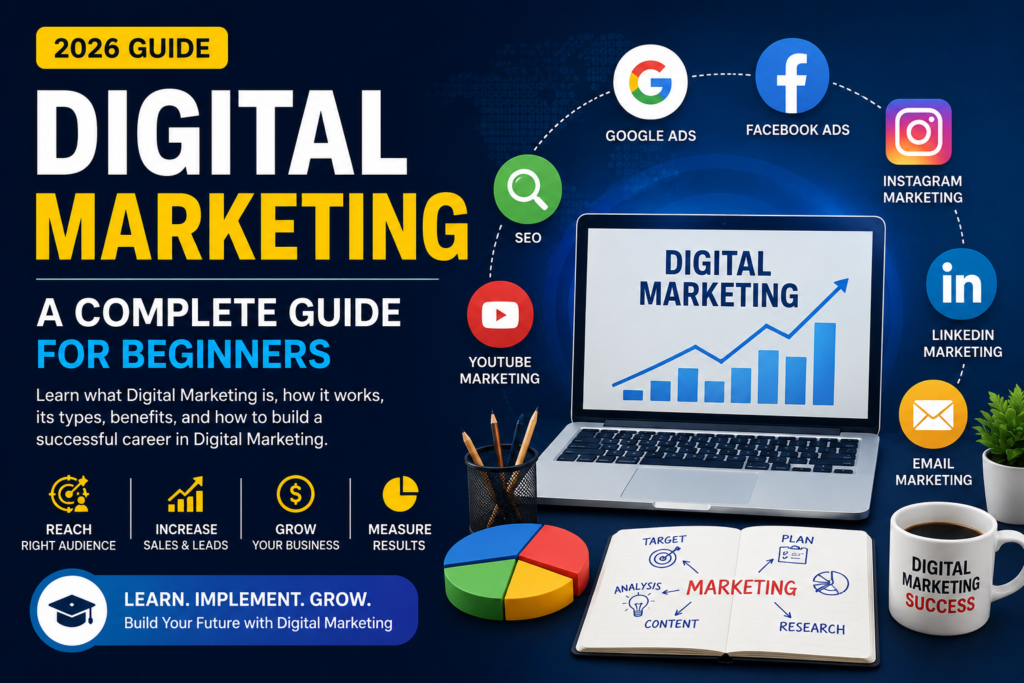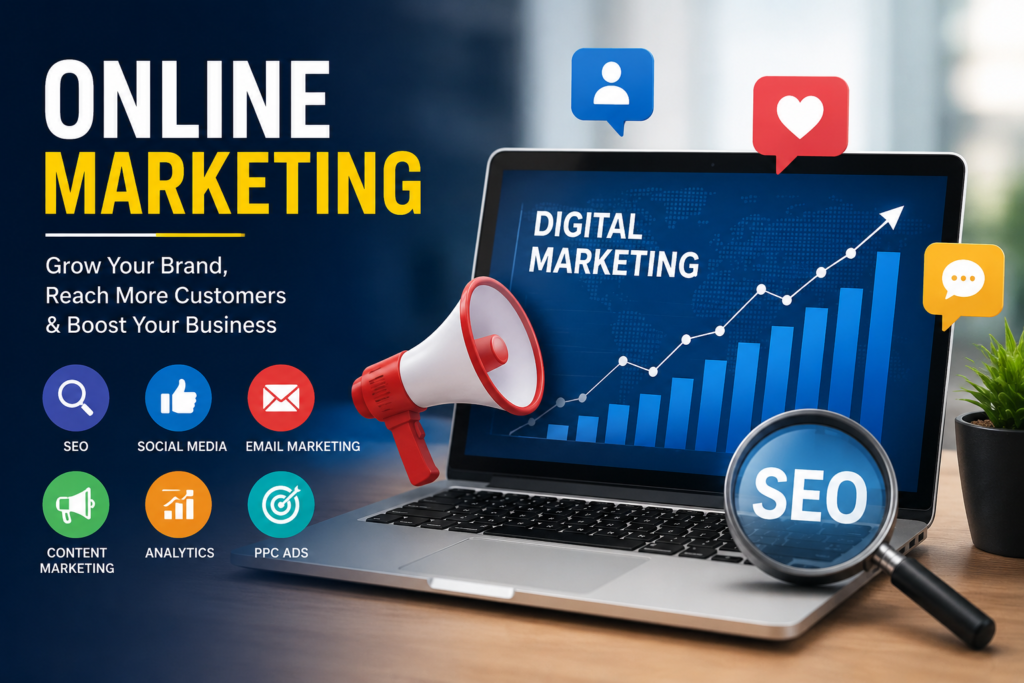
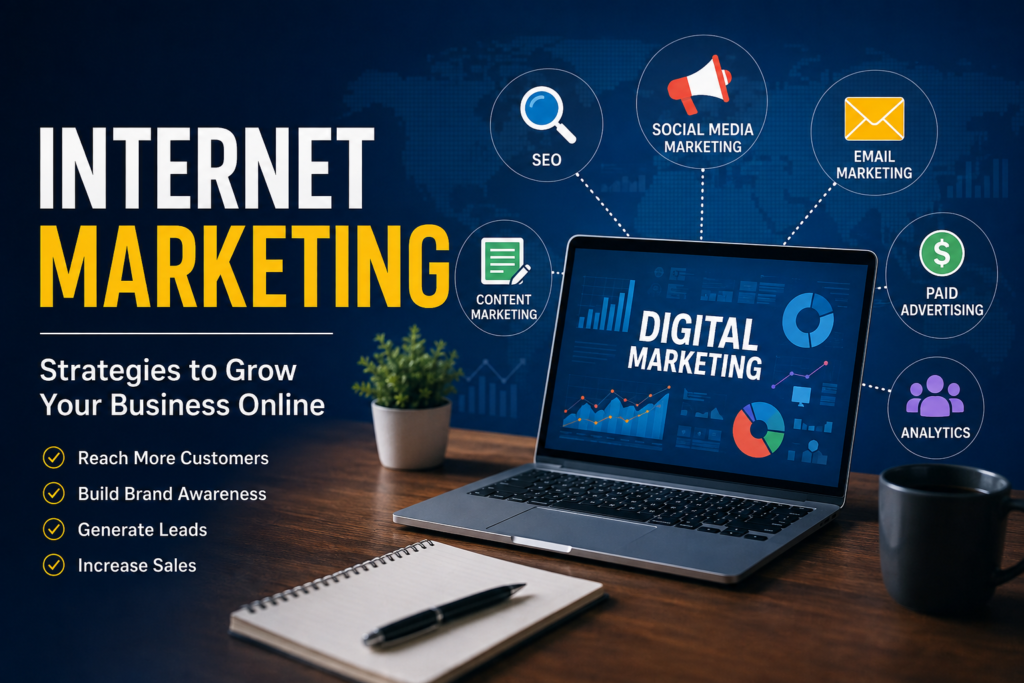
Internet marketing has become an essential part of building a successful business in the digital age. Whether you run a small business, online store, service company, or personal brand, effective online marketing can help you reach potential customers, increase brand awareness, and generate more sales. By using the right digital channels and providing useful content, businesses can connect with their target audience more effectively.
What Is Internet Marketing?
Internet marketing is the process of promoting a business, product, service, or brand through online channels. It is closely related to digital marketing, SEO, content marketing, social media marketing, and email marketing.
The main goal of Internet Marketing is not simply to attract visitors. It is to reach the right audience, build trust, encourage engagement, and convert interested visitors into customers. A well-planned strategy combines several online channels to create a consistent customer experience.
Why Is Internet Marketing Important?
People increasingly use search engines, social media, websites, and online reviews when researching products and services. This makes having a strong online presence important for businesses of all sizes.
One major advantage of Internet Marketing is that businesses can reach specific audiences based on interests, location, search behavior, and other factors. Online campaigns can also be measured using traffic, engagement, leads, and conversions.
Businesses can use these insights to understand what works and improve their marketing efforts over time. For additional information about search and website visibility, businesses can also refer to Google Search Central.
Popular Internet Marketing Strategies
Search Engine Optimization
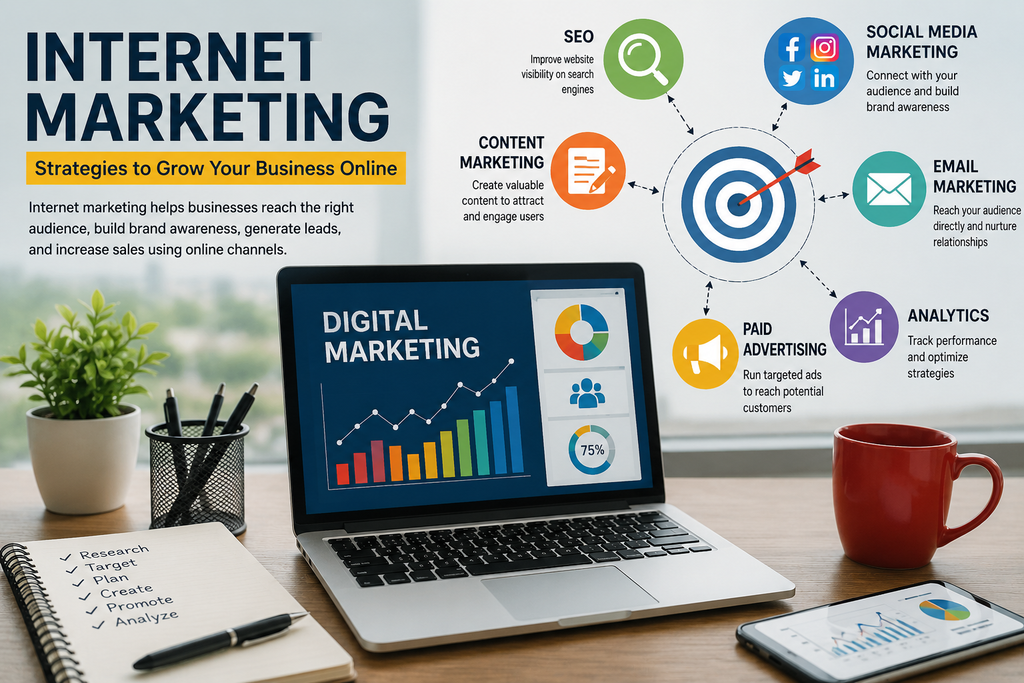
SEO helps a website improve its visibility in search engine results. It involves creating useful content, targeting relevant search terms, improving website structure, optimizing images, and earning quality backlinks.
A strong SEO strategy focuses on helping users find clear and valuable information. Instead of repeating keywords excessively, businesses should create content that naturally answers the questions their audience is searching for.
Content Marketing
Content marketing focuses on creating useful and relevant information for a target audience. Blog posts, tutorials, guides, videos, infographics, and case studies are common examples.
High-quality content can attract organic traffic, answer customer questions, and establish a business as a trusted source of information. Publishing consistently can also create more opportunities for a website to appear in search results.
Social Media Marketing
Social media marketing allows businesses to communicate directly with their audience. Platforms such as Facebook, Instagram, LinkedIn, TikTok, and YouTube can be used to share educational content, product updates, videos, promotions, and customer stories.
The best approach is to choose platforms where your target audience is active and provide content that encourages genuine engagement.
Email Marketing
Email marketing is another effective way to maintain relationships with customers. Businesses can use newsletters, product announcements, special offers, and helpful updates to communicate with subscribers.
A successful email strategy should provide value rather than sending unnecessary promotional messages. Personalized and relevant emails are more likely to keep subscribers engaged.
Paid Online Advertising
Paid advertising allows businesses to reach targeted audiences quickly. Search ads, display ads, social media advertising, and sponsored campaigns can generate traffic and leads when properly planned.
Before investing in paid advertising, businesses should define their goals, audience, budget, and expected results. Tracking campaign performance helps identify which advertisements provide the best return.
Benefits of Internet Marketing
A well-planned Internet Marketing strategy can provide several benefits for businesses. These include:
- Increased online visibility
- More targeted website traffic
- Greater brand awareness
- Better customer engagement
- More opportunities to generate leads
- Improved communication with customers
- Measurable marketing performance
- Opportunities to increase online sales
Another important benefit is flexibility. Businesses can test different content, advertisements, keywords, and platforms and then adjust their strategy based on performance.
How to Start Internet Marketing as a Beginner
Beginners should start by identifying their target audience and defining a clear marketing goal. For example, a business may want to increase website traffic, generate leads, build brand awareness, or increase sales.
Next, create a professional website with useful and easy-to-understand content. Optimize important pages for search engines and make sure the website works well on mobile devices.
After that, choose two or three marketing channels that match your audience. SEO and content marketing are useful for long-term organic growth, while social media and paid advertising can help increase reach and engagement.
Finally, monitor your results regularly. Use website analytics and search performance data to understand which pages and campaigns are producing results. Then improve your strategy based on real data.
Common Internet Marketing Mistakes to Avoid
Many beginners try to use every marketing platform at once. This can waste time and make it difficult to maintain quality. It is better to focus on a few channels and improve them consistently.
Another common mistake is creating content only for search engines. Content should always be useful to real people first. Avoid excessive keyword repetition, misleading headlines, and low-quality content.
Businesses should also avoid ignoring analytics. Without measuring results, it is difficult to know whether a marketing strategy is working.
Final Thoughts
Internet Marketing is an important part of online marketing, helping businesses reach customers, build trust, and grow online. SEO, content marketing, social media, email marketing, and paid advertising can each play an important role in a successful digital strategy.
The key is to understand your audience, create valuable content, choose the right marketing channels, and measure your results consistently. With patience and continuous improvement, Internet Marketing can become a powerful part of long-term business growth.